Skip to content
Blue Odyssey Initiative
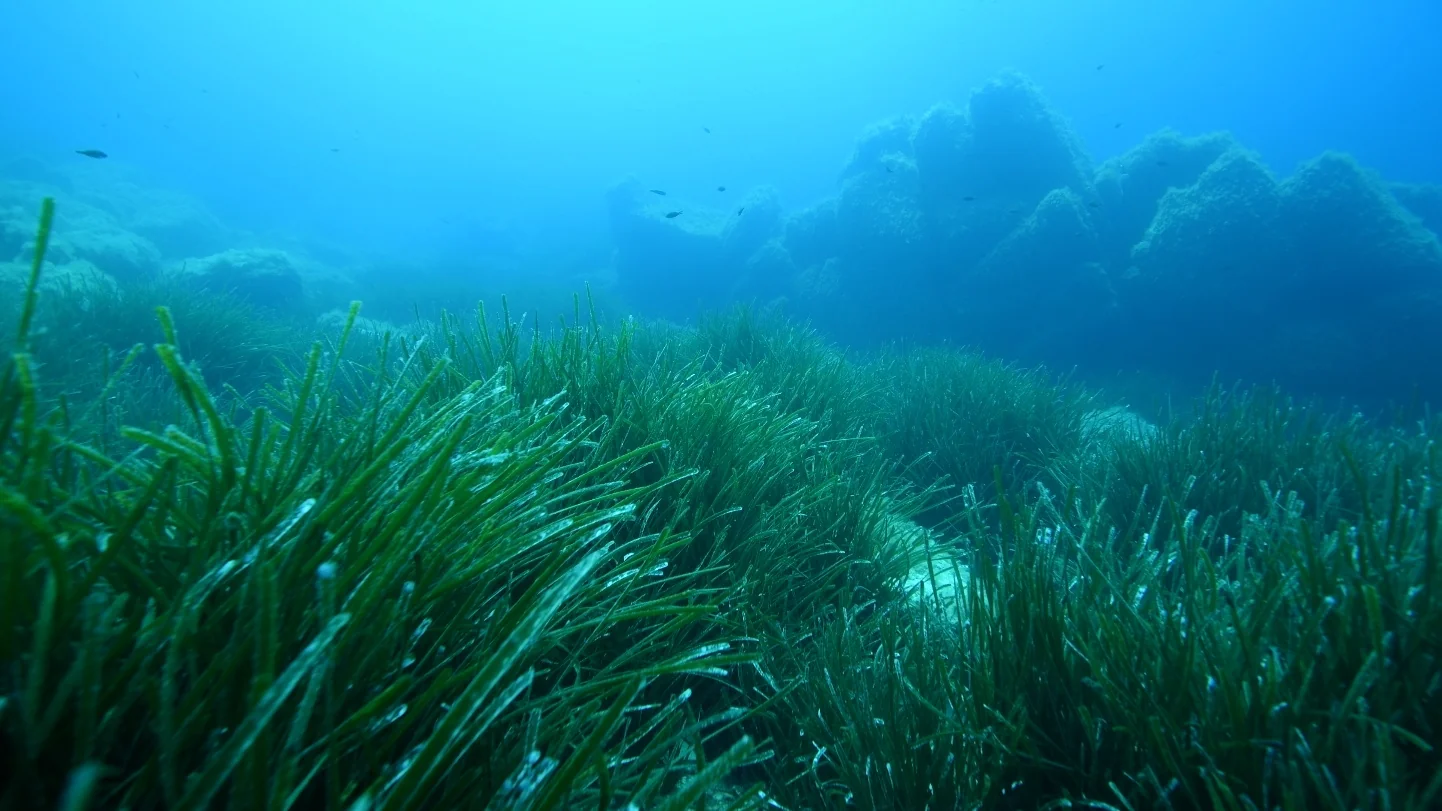
Posidonia seagrass meadow on the Mediterranean seabed

EXPLORE · EXPEDITIONS

We went underwater to understand what happens below the surface.

Blue Odyssey's expeditions are not a decorative archive. They explain why the organization exists and why its current projects are grounded in direct observation.

01 / 05

Why explore

Why direct observation matters
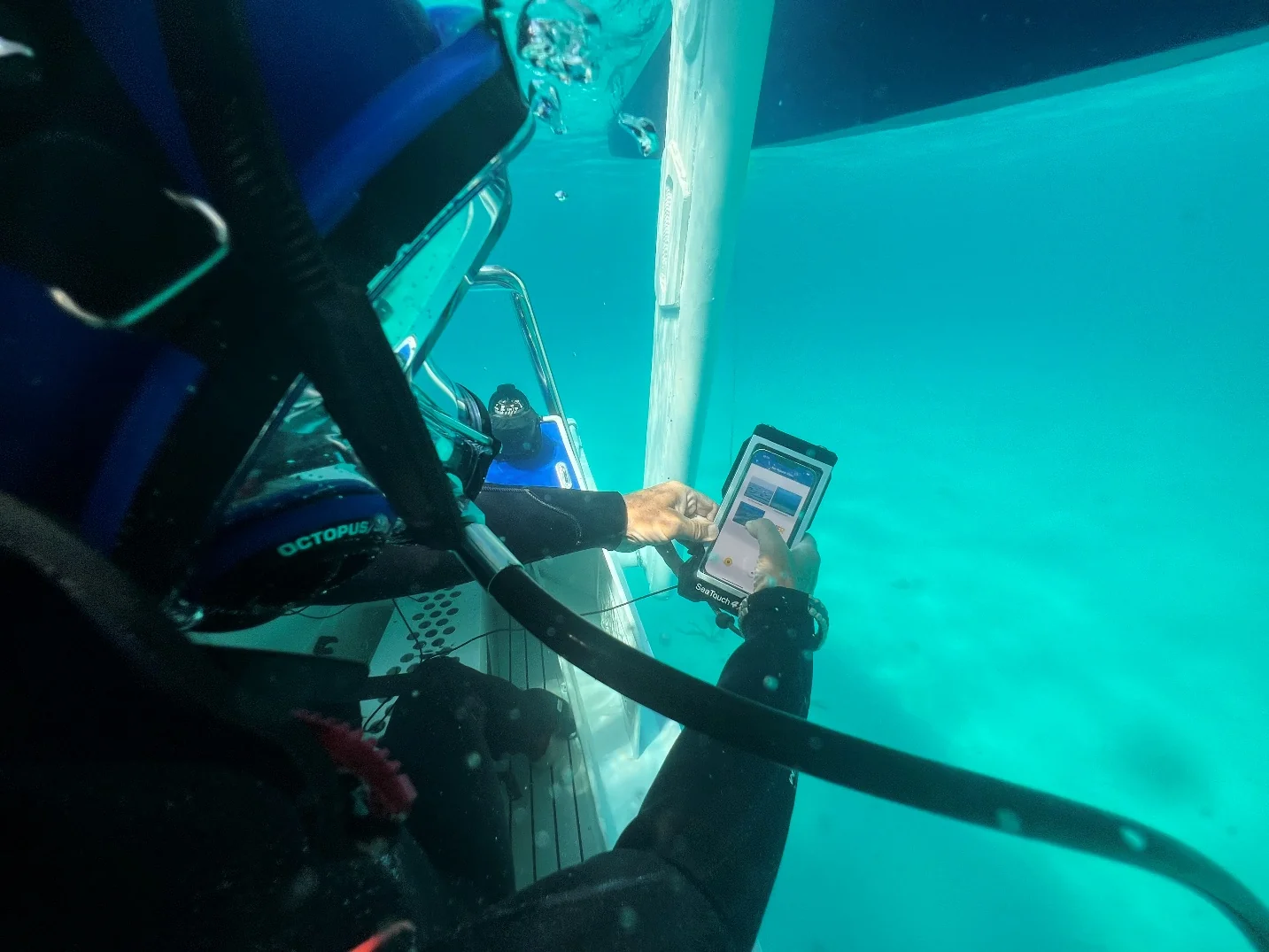
Observer documenting the seabed with a tablet from inside the Platypus

Blue Odyssey Initiative was created around a simple idea: before developing solutions, we need to understand what is really happening below the surface.

Many environmental pressures affecting coastal waters cannot be fully understood from land or through existing data alone. Direct underwater observation makes it possible to document marine biodiversity, pollution and seabed conditions in their real environment, while identifying patterns that may otherwise remain invisible.

This field-led approach shaped the first Blue Odyssey expeditions in Southern France and Corsica. By travelling through shallow coastal environments and observing them directly underwater, the team was able to document both preserved and degraded areas, identify environmental pressures and build a clearer understanding of the challenges affecting Mediterranean coastal ecosystems.

For Blue Odyssey, exploration is not an end in itself. It is the first stage of a broader process:

  1. Explore
  2. Understand
  3. Act

Field observations provide the evidence. Science, data and expert collaboration help interpret it. This understanding then informs the development of practical environmental solutions such as Blue AI and PolluSub.

We went to sea to observe. What we discovered convinced us to act.
02 / 05

The Platypus

A new way to observe the underwater world

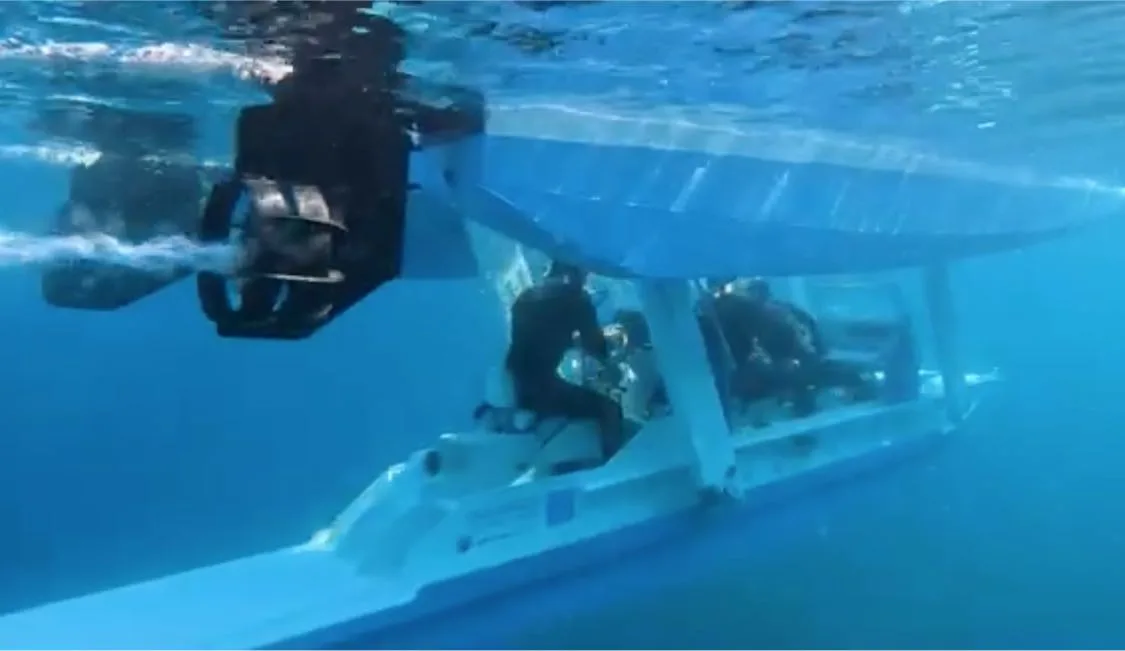
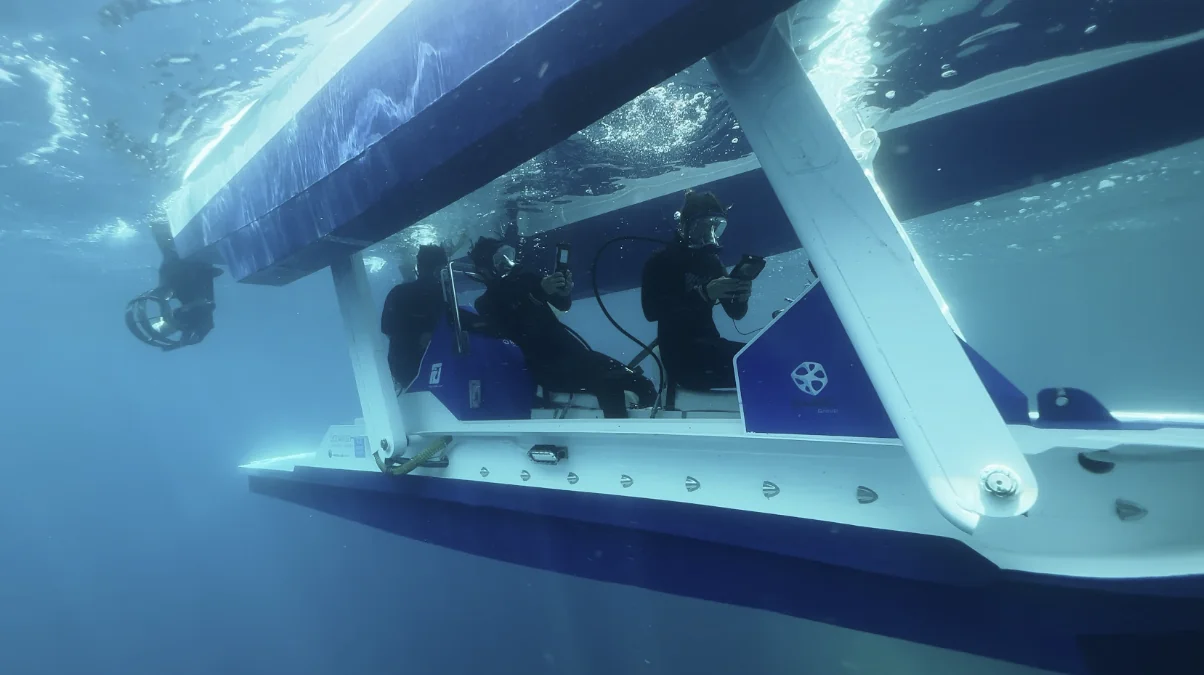
The Platypus semi-submersible seen from underwater with observers on board

Platypus Craft is an innovative semi-submersible boat created to make the underwater world visible.

Designed as a platform for underwater exploration and observation, the Platypus can operate both in conventional navigation mode and in a semi-submersible configuration, allowing passengers and observers to experience coastal environments directly below the surface.

Blue Odyssey used the Platypus during its expeditions as a field platform for travelling through shallow coastal waters, conducting underwater observations and documenting marine environments over extended distances.

For Blue Odyssey, the Platypus represents more than a vessel. It embodies the principle on which the initiative was built: bringing people closer to the underwater environment in order to better observe, understand and protect it.

Platypus gives inspiration to one-of-a-kind initiative — TEDxVitosha
  • Platypus Craft — teaser

  • Meeting dolphins aboard the Platypus

03 / 05

Southern France and Corsica

Two expeditions, one method: observe the coast from below.

In 2022 and 2023, Blue Odyssey explored shallow coastal waters on two Mediterranean coastlines, travelling for kilometres underwater aboard the Platypus to record fauna, flora and marine litter along the way.

  • The Platypus in semi-submersible mode with divers on board, Blue Odyssey Sud 2022

    Blue Odyssey Sud

    June 2022

    Monaco → Marseille

    Three weeks along the coast of Southern France, with stops in Nice, Antibes, Saint-Tropez, Porquerolles, the Île des Embiez and La Ciotat. The team set out to show both the fragility of coastal seabeds threatened by pollution and the beauty of the sea, finding degraded environments as well as preserved and restored ones.

    explored underwater
    56 kmexplored underwater
    travelled in total
    350 kmtravelled in total
    of underwater observation
    44 hof underwater observation
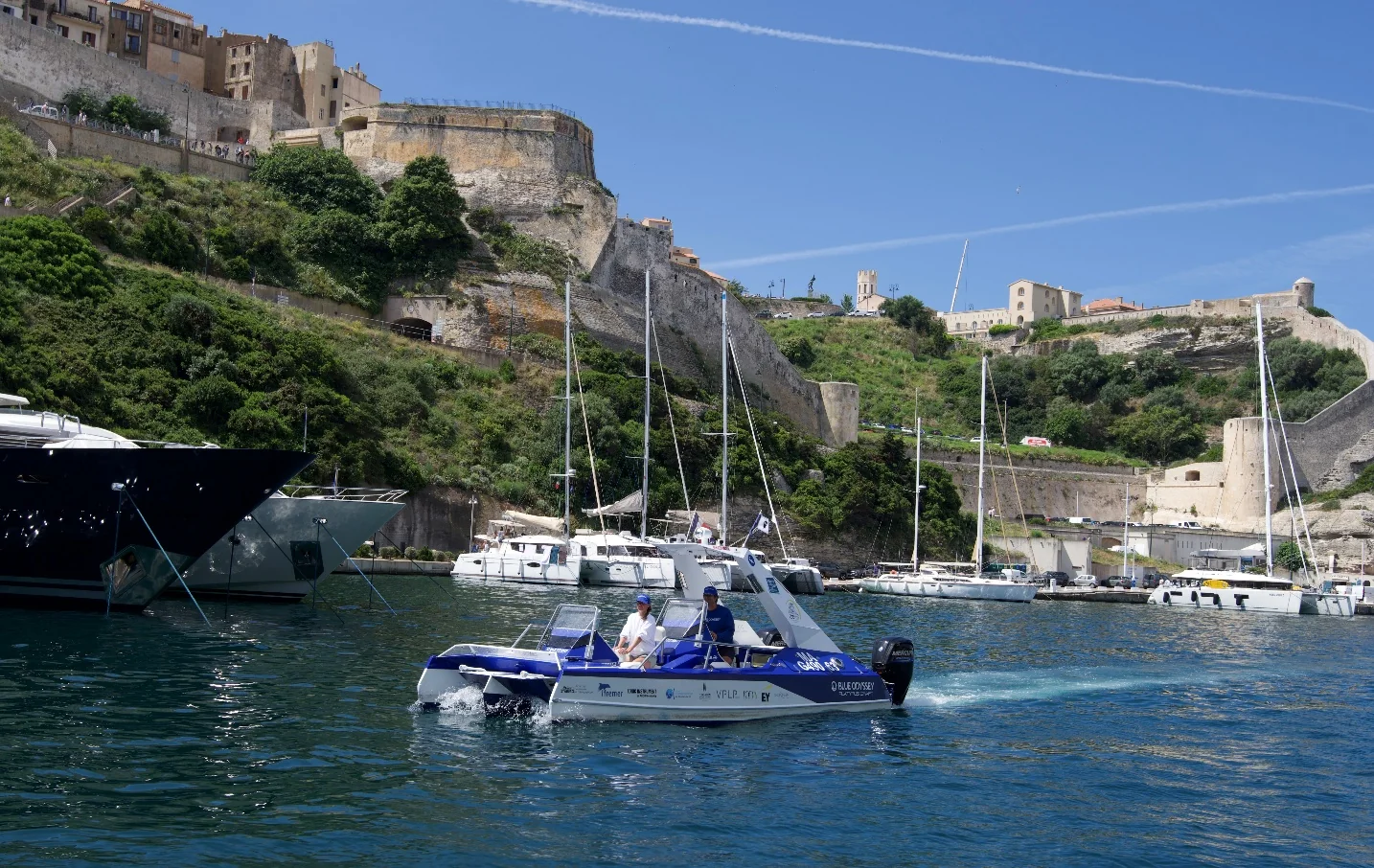
  • The Platypus sailing in the harbour of Bonifacio, Corsica

    Blue Odyssey Corsica

    June 2023

    Ajaccio → Porto-Vecchio

    Three weeks exploring the shallow coastal waters of southern Corsica, from the surface down to 15 metres, to assess visible pollution and the state of marine biodiversity. The expedition was carried out at the request of the Agence de l’eau Rhône Méditerranée Corse, the Fonds HLD pour la Méditerranée and the Fondation de la Mer. Every observation was geolocated and categorised underwater, and five Villages de la mer were set up along the way to raise awareness among schoolchildren and the public.

    explored underwater
    57 kmexplored underwater
    dive sites explored
    23dive sites explored
    children reached
    400children reached
Blue Odyssey Corsica — expedition film

04 / 05

What we documented

Biodiversity, pollution and seabed conditions.

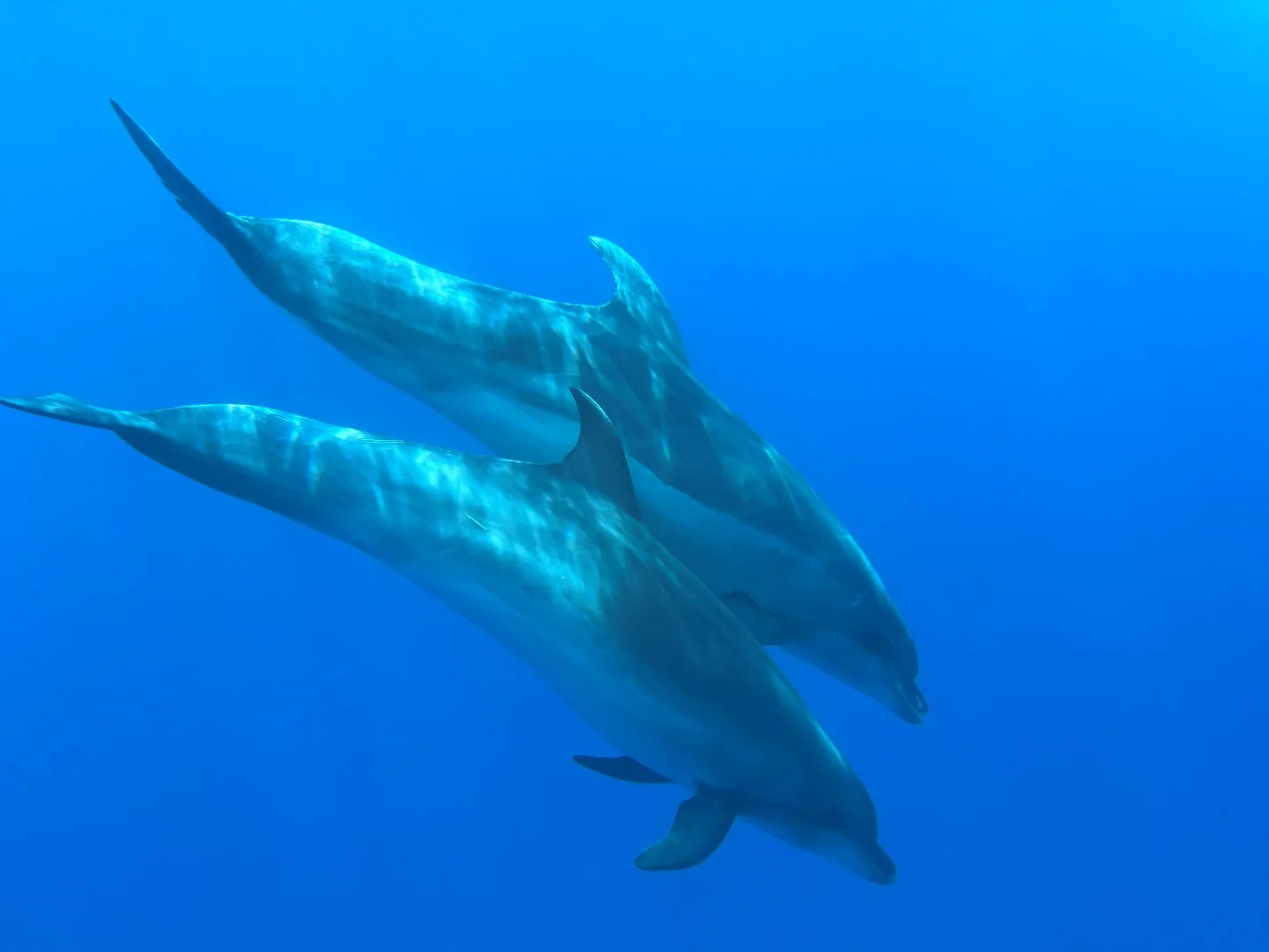
  • Two dolphins swimming in open water during an expedition

    Biodiversity

    Along the coast of Southern France, seagrass meadows were widespread and fish were plentiful wherever they grew. In Corsica, fish were scarcer, even above healthy meadows, while rays and dolphins were encountered again and again.

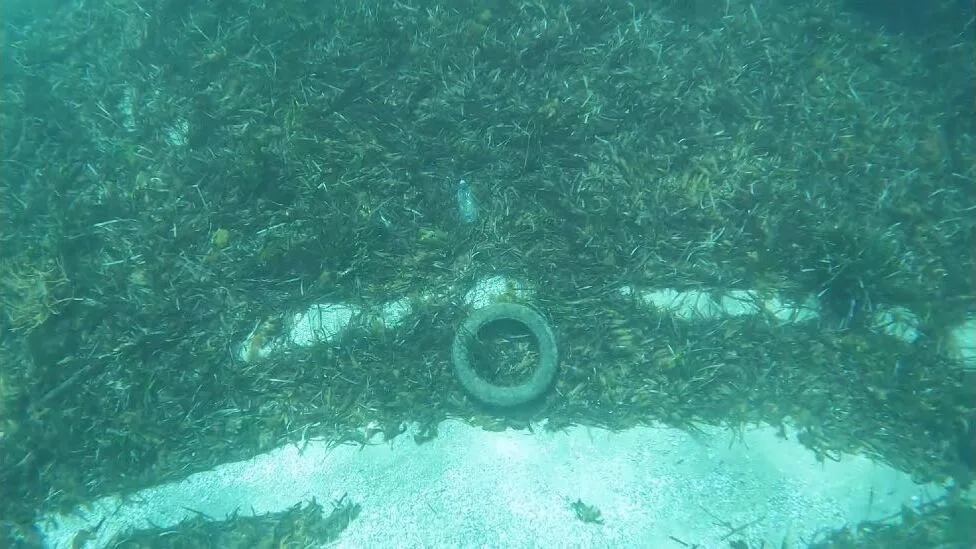
  • A tyre lying in a seagrass meadow, filmed from the Platypus in Southern France

    Pollution

    Most of the litter observed was scattered and lay on the seabed rather than floating. One accumulation zone was found, in the Gulf of Sant’Amanza in Corsica. Beaches and ports were affected all along the way.

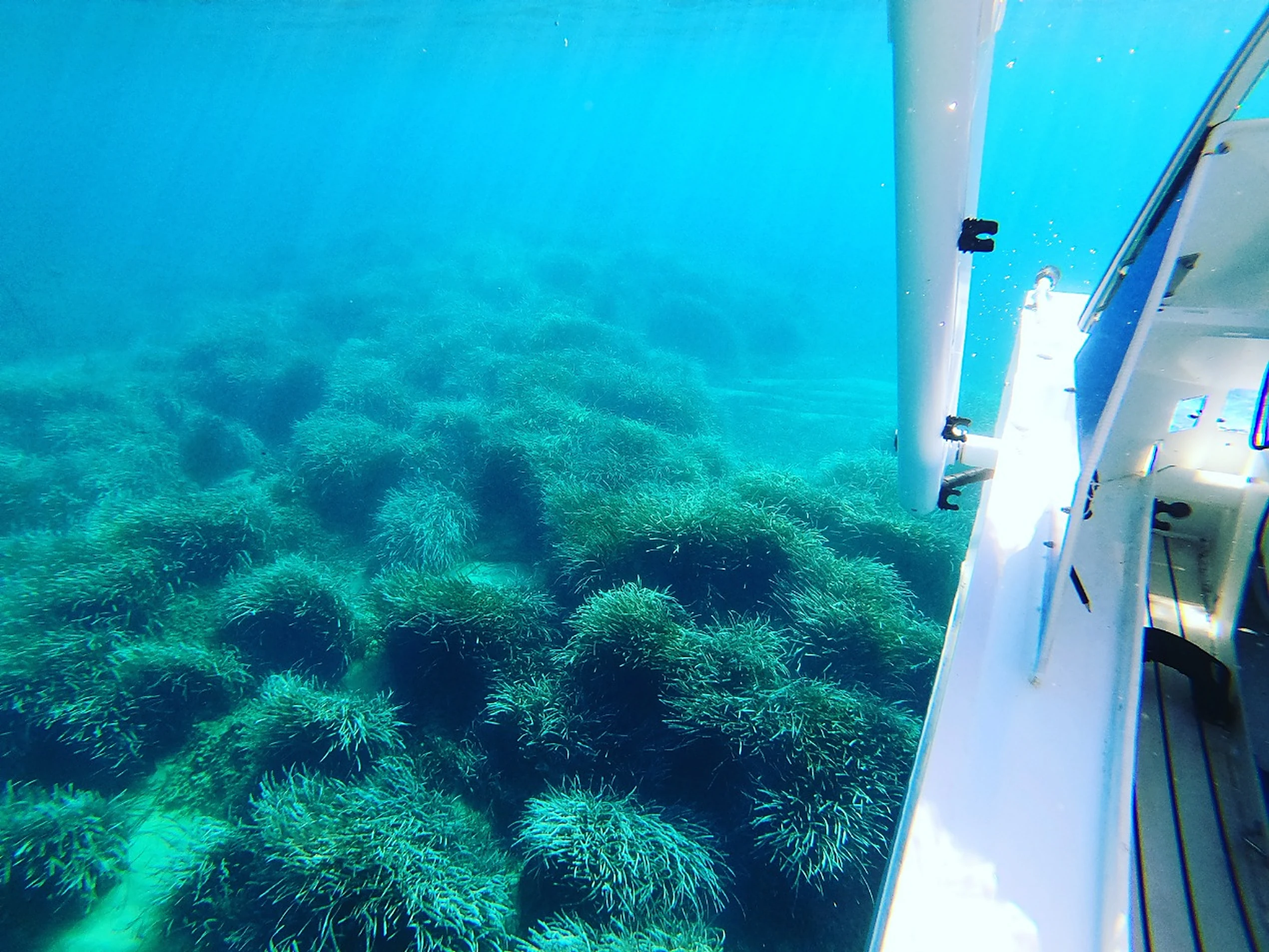
  • Underwater view along the hull of the Platypus above a seagrass meadow

    Seabed conditions

    Anchoring tears up Posidonia meadows, including in protected areas. In Corsica, around half of the sites where Posidonia was recorded were judged degraded. Muddy deposits and filamentous algae blooms were also observed.

05 / 05

What we learned

Environmental information is fragmented; some waste travels below the surface.

  1. 01

    Information is fragmented

    Scientists, associations, public bodies, divers and fishers each hold part of the picture. The expedition data only takes on its full meaning once compared with theirs — which is what the Corsica report calls for.

  2. 02

    Waste travels below the surface

    Most of the litter we saw rested on the seabed. Carried by currents, it collects in bays, seagrass meadows and around ports, places surface-focused clean-ups do not reach.

  3. 03

    One dive is not enough

    Each site was observed once, in June, before the tourist season. Understanding how waste moves requires repeated observation over time.

  4. 04

    Act where people still can

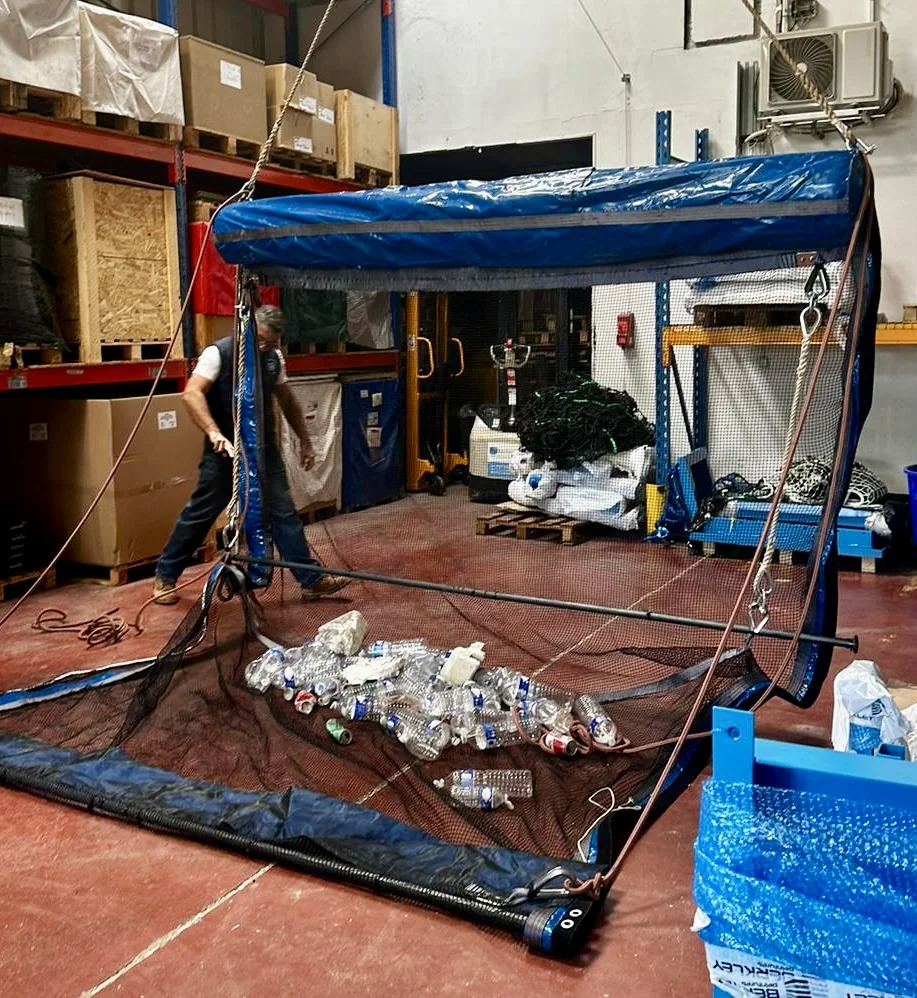
    Both reports reach the same conclusion: intercept waste at its source and along the coast, where people can still act — from nets at river and outfall outlets to collection in ports.

What came next

  1. EXPLOREThe expeditions provided the observations.
  2. UNDERSTANDBlue AI transforms them into understanding.
  3. ACTPolluSub turns understanding into action.